Cockroach treatment:
prepare, return
& restock.
What should you empty? Does the food stay in the fridge? When can the dishes go back? Here is a practical guide to getting your home ready and using your kitchen again after treatment.
Start with the checklist
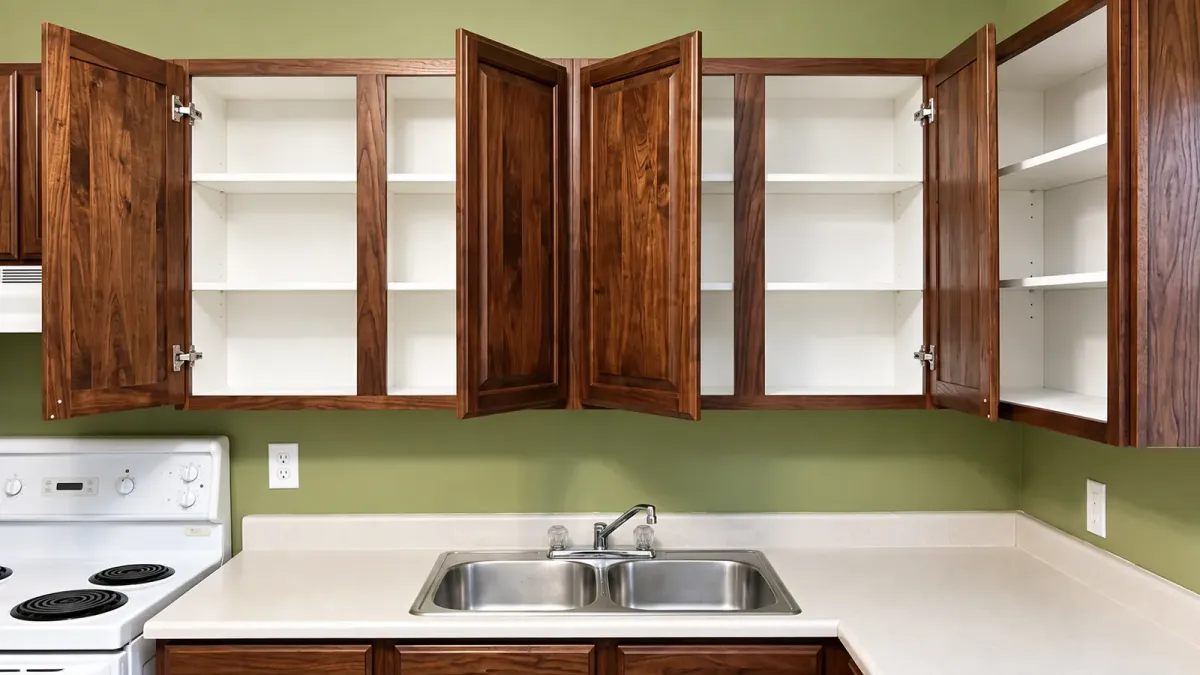
A better start to treatment.
Food stays in the fridge
For our usual targeted service, we do not treat the food compartment.
Check your return time
Use the time confirmed for your appointment, plus any drying and ventilation requirements.
Restock when cleared
Dry, approved storage surfaces can be used. Keep treated edges and bait accessible.
01 / Before your visit
How to prepare your house for cockroach treatment
Make the hiding places accessible and keep everyday items protected.
For a kitchen-and-bathroom treatment with 401 Pest Control, prepare the rooms listed in your appointment message. If you cannot complete a step, tell us before the visit so we can work out the access needed.

02 / A common question
Do I need to empty the fridge?
Usually, no. The focus is behind and underneath the appliance.
For our usual targeted cockroach service, food can stay in the closed refrigerator. We do not treat inside the refrigerated food-storage compartment. Keep food covered and the doors closed.
We inspect behind and underneath the fridge, including the warm area around the compressor and the lower rear cover, sometimes called the dust cover. Any treatment is selected for the findings, product label and safe appliance access. This does not mean spraying the motor, wiring or inside the fridge.
Leave the rear cover in place. Tell us about water lines, an ice maker, a built-in fridge or difficulty moving it. Do not leave a food-filled fridge unplugged for the whole appointment; agree any brief disconnection and reconnection with the technician. If the food compartment itself is affected, tell us so we can give separate instructions.
- 1Inside
Food stays covered in the closed fridge.
- 2Lower rear area
Leave the cover and appliance parts in place.
- 3Behind & underneath
Arrange safe access for the technician.
03 / After the visit
When can I enter the house again?
Use the confirmed return time, then follow the drying and ventilation instructions.
Check the written instructions left for your appointment. If your message says to remain out for at least 2 hours after treatment is completed, that is a minimum for that appointment, not a guarantee that every home or product is ready at 2 hours. If we give you a longer interval, such as 3½ hours, use that longer interval.
Do not enter while treated spray deposits are still wet. Ask the technician to confirm readiness if drying is uncertain. The Seclira WSG label, for example, requires people and pets to remain outside treated areas until sprays have dried; other products can have different requirements.
Follow the ventilation plan given for your service. If your technician asks you to open windows for 15–30 minutes after the permitted return time, that is an additional instruction, not a replacement for the waiting period or confirmation that every treatment needs only that amount of ventilation. Do not enter early to open windows.
- 01
Wait
Stay out until the technician's stated return time. Count from completion of treatment, not arrival.
- 02
Confirm drying
Sprayed areas must be dry. If unsure, contact us before entering.
- 03
Ventilate as directed
Follow the air-flow instructions for your visit before resuming normal use.
- 04
Prepare the kitchen
Complete the required cleaning of food-contact surfaces before cooking or restocking.
04 / Using the kitchen
Can I use the kitchen, and should I only use dry paper towels?
Clean food-contact surfaces appropriately. Leave intended treatment placements undisturbed.
You can resume food preparation after you are cleared to return, the required drying and ventilation are complete, and food-contact surfaces have been cleaned as directed. A dry paper towel is not a substitute for removing pesticide contamination from a countertop.
Health Canada recommends washing surfaces that normally touch food, such as counters, tables and stovetops, with hot soapy water after the pesticide has dried. Keep that cleaning away from intentional bait and treated cracks. If you see spray or dust where food or dishes will touch, stop using that area and ask us to address it.
An instruction to avoid washing treatment away applies to the specific treated locations. It is not a blanket ban on water throughout the kitchen. Ask which edges, gaps or placements must be left alone and for how long. Do not wipe those placements with a dry cloth either.
Clean before food use
Counters, tabletops and food-preparation areasAfter the return and drying requirements are met, wash food-contact surfaces as directed. Clean any exposed utensils before use. Dry wiping alone is not enough.
Leave treatment in place
Bait dots, treated cracks, gaps and specified edgesDo not scrub, wet-wipe, dry-wipe or spray over these placements. Keep food and dishes away. Follow the technician's stated cleaning interval.
Confirm before restocking
Cabinet shelves and drawer basesAsk which flat storage surfaces can be cleaned and used. If residue is present or instructions are unclear, keep those spaces empty until we clarify.
05 / Putting things back
Can I put dishes back after 3½ hours?
Yes, if all the conditions for your particular treatment have been met.
If 3½ hours is the return interval we gave you, that time has passed, the treated areas are dry, and the technician has cleared the storage surfaces for use, you can put clean items back in the approved cupboards. Complete any required shelf cleaning first. Do not use the clock alone to decide.
You do not need to automatically wipe every cupboard with a dry paper towel. Ask which shelves or drawer bases need cleaning and which cracks or edges must remain untouched. If a flat shelf has unintended pesticide residue, do not cover it with shelf liner or put dishes on top of it; contact us for correction.
Restock neatly, leaving the edges and any bait placements accessible. Keep food in closed containers and avoid pushing plates, cups or packaging into treated gaps. If one cabinet has not been cleared, keep only that cabinet empty while you confirm the next step.
Before the dishes go back
- The return interval written for my appointment has passed.
- Required drying and ventilation are complete.
- The technician has identified the storage surfaces I can use.
- Required cleaning is complete and items will not contact treatment placements.
If any point is unclear, keep the items protected and contact us.
06 / Between appointments
Keep the kitchen usable and ready for follow-up
Keep food sealed, remove crumbs and spills from ordinary food-use areas, and take out rubbish regularly. Leave treatment placements and monitoring traps where the technician put them. Avoid adding your own insecticides.
Keep a simple record of sightings: the date, room and approximate number seen. Tell us about persistent activity, new rooms affected or access we could not reach during the first visit. Confirm the date and preparation instructions for the second visit rather than assuming the same areas need emptying again.
A few more answers
Questions customers ask us
Do all kitchen and bathroom cabinets need to be emptied?
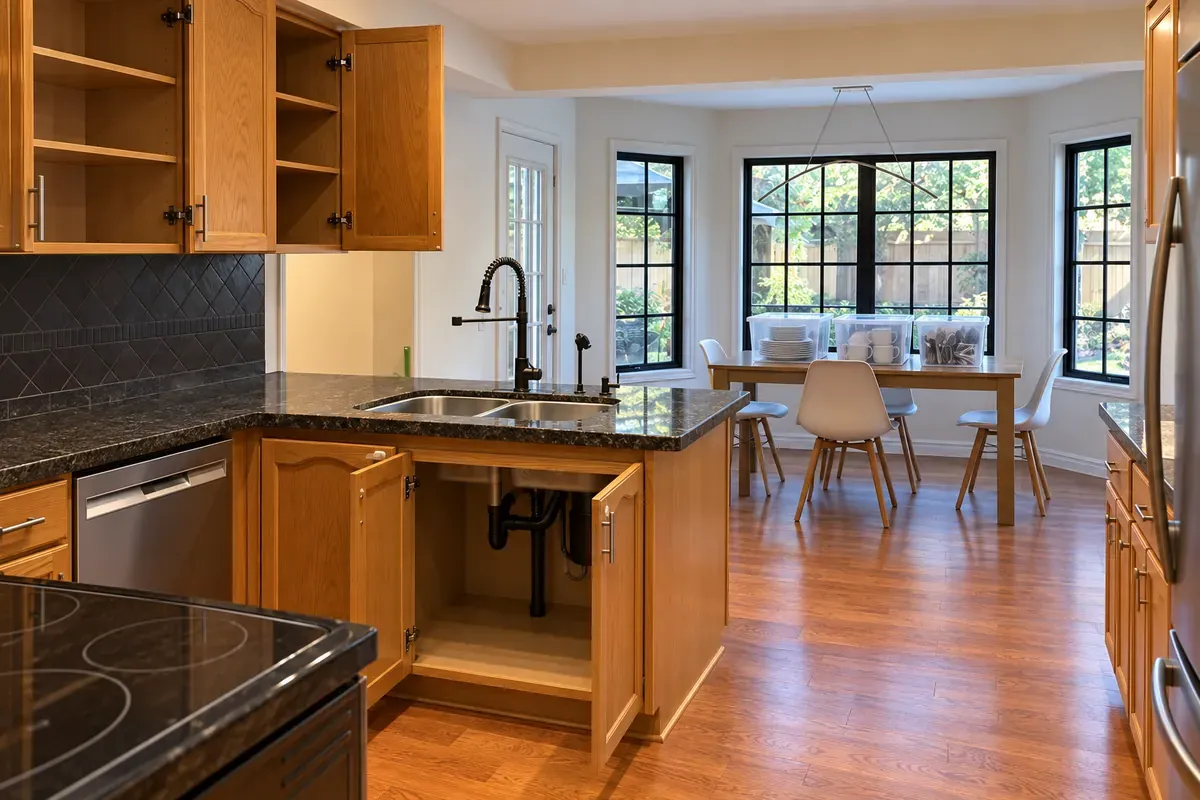
Empty those included in your appointment preparation instructions, including under-sink spaces and the requested drawers. For a full kitchen-and-bathroom treatment, that may mean all cabinets in those rooms. Tell us if a space cannot be cleared.
Should the microwave, toaster and kettle be moved to another room?
Leave them available in the kitchen for inspection, with food and removable water emptied. Do not move potentially infested appliances around the home. Any treatment must be suitable for the appliance and permitted by the product label.
Do I need to empty the food inside my fridge?
Usually no. Our usual targeted service addresses hiding places behind and underneath the fridge, not the refrigerated food compartment. Tell us if you have seen cockroaches inside it.
Can I return earlier just to open the windows?
No. Follow the written return time and ask us how ventilation will be managed if it is needed before occupants can return.
Can I wipe countertops with water after treatment?
Yes, food-contact surfaces need the cleaning specified for your treatment before food use. A general dry-towel-only rule is not appropriate for contaminated food-contact surfaces. Keep cleaning away from bait and treated cracks.
Should cupboards stay empty until the second visit?
Only where your technician asks you to keep them empty. Otherwise, restock approved surfaces after the return, drying and cleaning requirements are met. A few closed tubs can make the next preparation easier.
A question about your appointment?
Ask before you wipe or restock.
Send us the cabinet or surface you mean and the instructions you received. We can explain what applies to your treatment. Planning a first visit? Tell us which rooms are affected.
Explore my optionsAlready booked? Call 226-799-8923Sources & service guidance
This guide answers preparation and aftercare questions. Your technician's instructions and the labels for the products actually used determine the requirements for your appointment.
- Health Canada: Using pesticides safely
General guidance on protecting food and utensils and cleaning food-contact surfaces. Your actual product labels determine treatment-specific precautions.
- BASF Canada: Seclira WSG registered product label
Registration 34816. An example of product-specific drying, ventilation and food-contact precautions. Not every appointment uses the same products.
- Health Canada: Cockroaches
Identification, sanitation, food storage and inspection guidance.
- 401 Pest Control appointment preparation guidance
Prepared from customer questions and our service instructions. Images are AI-generated or AI-edited illustrations, not photographs documenting a customer's treatment.