Why Do Ants Keep Coming Back? Trails, Nests and Treatment
Wiping away a line of ants can make the kitchen look clear while leaving the source untouched. The useful question is not simply how to kill the ants you can see. It is whether those ants are arriving from outdoors, feeding an indoor colony or travelling between nesting areas.

Ants can return because the colony remains active, food or moisture is still available, or a route into the building has not been addressed. The species and nesting location determine the treatment. Repeatedly spraying a visible trail can interfere with a bait programme and, for some indoor-nesting ants, contribute to a colony splitting.
Start with a trail map, not another product
Before cleaning an active trail, photograph it and note where ants enter and where they are feeding. A trail along a window frame suggests an inspection route; it does not prove the nest is inside that frame. Likewise, ants at a sink may be visiting moisture rather than living beneath the sink.
Record the room, time and approximate activity: an isolated ant, a steady trail or a cluster at food. Check the same places on subsequent days. This creates a useful comparison for the technician and helps distinguish a changing route from a growing problem.
- Photograph an ant close enough to show its shape, with a ruler nearby if practical. Colour alone is not enough for reliable identification.
- Note leaks, spills, pet food, recycling residue and vegetation touching the building near the route.
- Keep the names and application dates of any products already used. Tell the technician where they were applied.
Different ants need different investigations
Ants can nest in soil, around foundations, beneath slabs and in wood. An outdoor forager does not automatically mean an indoor nest. That distinction matters: treating every room may miss the actual source.
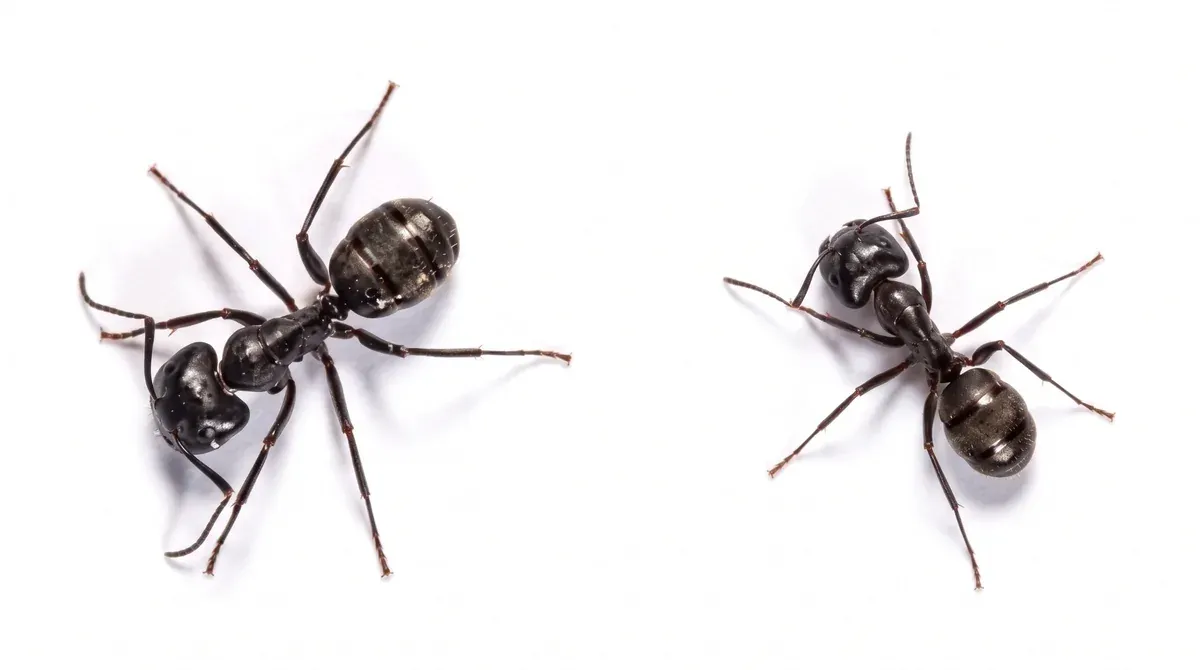
Carpenter-ant concerns deserve a closer look at moisture and wood. Repeated activity near water-damaged areas, sawdust-like debris or winged ants indoors should be assessed, but no single clue establishes the species or extent of damage. Carpenter ants excavate galleries rather than eating wood. Finding one large ant is not proof that the structure is infested.
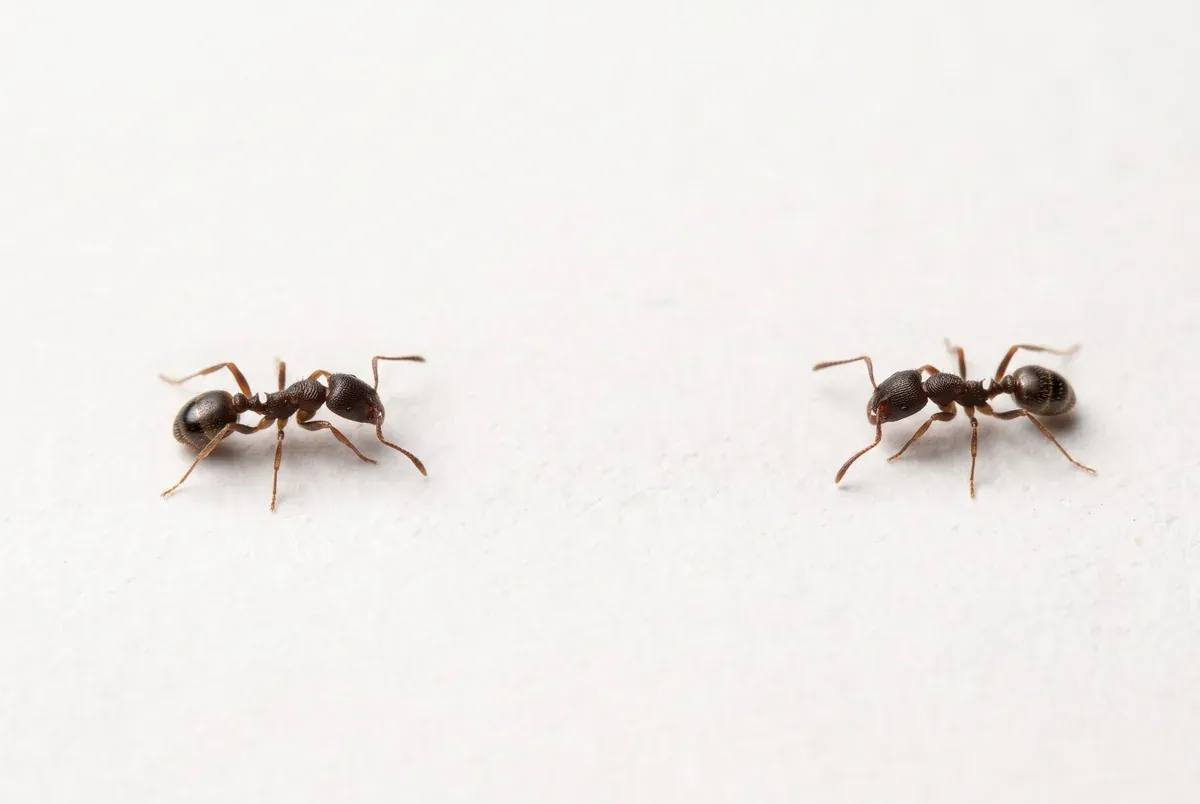
Very small ants are particularly easy to confuse. Avoid choosing a treatment from a photograph on a product package alone. A usable specimen or clear images can help a professional determine whether further identification is needed.

Why a spray can clear the counter without resolving the colony
A contact treatment may affect exposed workers without reaching the nest. Colony-directed baiting uses foraging behaviour, so its success depends on the correct bait, access to it and a plan suited to the identified ant. A bait is not an instant knockdown treatment.
Health Canada advises against adding ant sprays while using a bait system. If professional baiting is underway, ask which areas you can clean and leave the placements undisturbed. Do not move bait stations into a different room simply because it looks quieter there.
No universal number of days proves that treatment has failed. The product, ant species, colony location and property conditions all affect progress. Ask for a review point and report what is happening then, rather than repeatedly changing products.
Reduce the reasons ants keep visiting
Use the trail map to prioritise a few specific changes. Cleaning every visible surface once is less useful than consistently removing the food or water at the end of a recurring trail.
- Clean spills and food residues, including beneath accessible appliances and around pet feeding areas. Store food in containers that close securely.
- Empty and clean indoor waste and recycling containers when residues are attracting ants.
- Repair plumbing leaks and investigate persistent dampness around windows, doors or timber.
- Inspect damaged seals and gaps around service penetrations. Coordinate sealing with the treatment plan so the source can first be investigated.
- Keep vegetation and stored materials from providing easy access or hiding places against the building where practical.
How to judge progress without guessing
Choose two or three observation points and check them at comparable times. Log whether ants are feeding, passing through or appearing in a new area. A short record is more informative than the statement that there are still some ants.
For example, write: 'Kitchen window, evening, steady trail on Monday; a few ants on Thursday; new trail at pantry on Saturday.' This is an example of a useful record, not a promised treatment timeline. Send photos of the new route rather than applying another product to it.
When to arrange a closer inspection
Ask for help when trails return despite removing obvious attractants, activity spreads to several rooms, wood or moisture damage is suspected, or the species is uncertain. In a shared building, tell the manager about repeated activity so inspection and access can be coordinated.
A useful service discussion should cover the identification, likely nesting areas, proposed treatment, what you should leave undisturbed and how progress will be reviewed. Persistent activity is a reason to reassess those details, not automatically a reason to use more pesticide.
Find out what is sustaining the ant activity
Tell us where the ants appear, whether the trail changes and what has already been applied. We can inspect the activity and explain an ant-control plan for your property.
Sources and further reading
Sources below support the general identification, prevention, and treatment information used in this guide.
- Ontario Pesticide Training and Certification, Core Manual (2017)
Section 2: Integrated Pest Management, identification and evaluation (supplied training copy, PDF pages 22 and 33).
- Ontario Pesticide Training and Certification, Structural Module (2020 revision)
Section 3: Integrated Pest Management (PDF pages 31–40); Appendix A: Pests of Structures (ants, PDF pages 247–250). Supplied training copy.
- Health Canada: Ants
- Health Canada: Carpenter ants